Home/Explained/REAL ID vs Passport Card: The Choice Hinges on Whether…
REAL ID vs Passport Card: The Choice Hinges on Whether You Ever Leave the Continent
In this report
The cheapest ID that gets you through a TSA checkpoint is not necessarily the cheapest ID that covers your actual travel. Domestic flyers can settle for a REAL ID-compliant driver's license or state ID. Add land or sea crossings to Canada, Mexico, Bermuda, or the Caribbean, and the passport card or a state-issued Enhanced Driver's License enters the picture. Need to fly to Europe, Asia, or anywhere overseas? Only the passport book qualifies. The right document depends on mapping your real itinerary against what each credential costs and where it actually works.
What TSA Accepts at the Checkpoint
As of May 7, 2025, every U.S. traveler boarding a domestic flight must present a REAL ID-compliant credential or an alternative approved document. The Transportation Security Administration lists several that satisfy this requirement: a U.S. passport, U.S. passport card, or a state-issued Enhanced Driver's License. The Department of Defense travel guidance confirms this list, and United Airlines includes the same options in its published travel document requirements for U.S. passengers.
Crucially, an Enhanced Driver's License functions as REAL ID regardless of whether the physical card displays the star symbol. Michigan, which has issued enhanced licenses since 2008, notes that these credentials are automatically REAL ID-compliant under federal standards. New York confirms that both its standard REAL ID and its Enhanced Driver License meet federal REAL ID purposes. For airport screening, all three categories—standard REAL ID license, passport card, and enhanced license—perform identically.
Where the Documents Diverge
The passport card and Enhanced Driver's License share a critical limitation: neither works for international air travel. The passport card, as the State Department specifies, is "valid only for travel by land and by sea to Canada, Mexico, Bermuda, and the Caribbean." It will not board you on a flight to Toronto, let alone Tokyo. U.S. Customs and Border Protection accepts it for land and sea crossings from Canada and Mexico, making it functional for drivers and cruise passengers headed to those destinations.
The Enhanced Driver's License carries the same geographic footprint. Michigan's Department of State explicitly states it is "acceptable for domestic air travel" and for land and sea entry from Canada, Mexico, Bermuda, and some Caribbean nations. It does not expand beyond that zone.
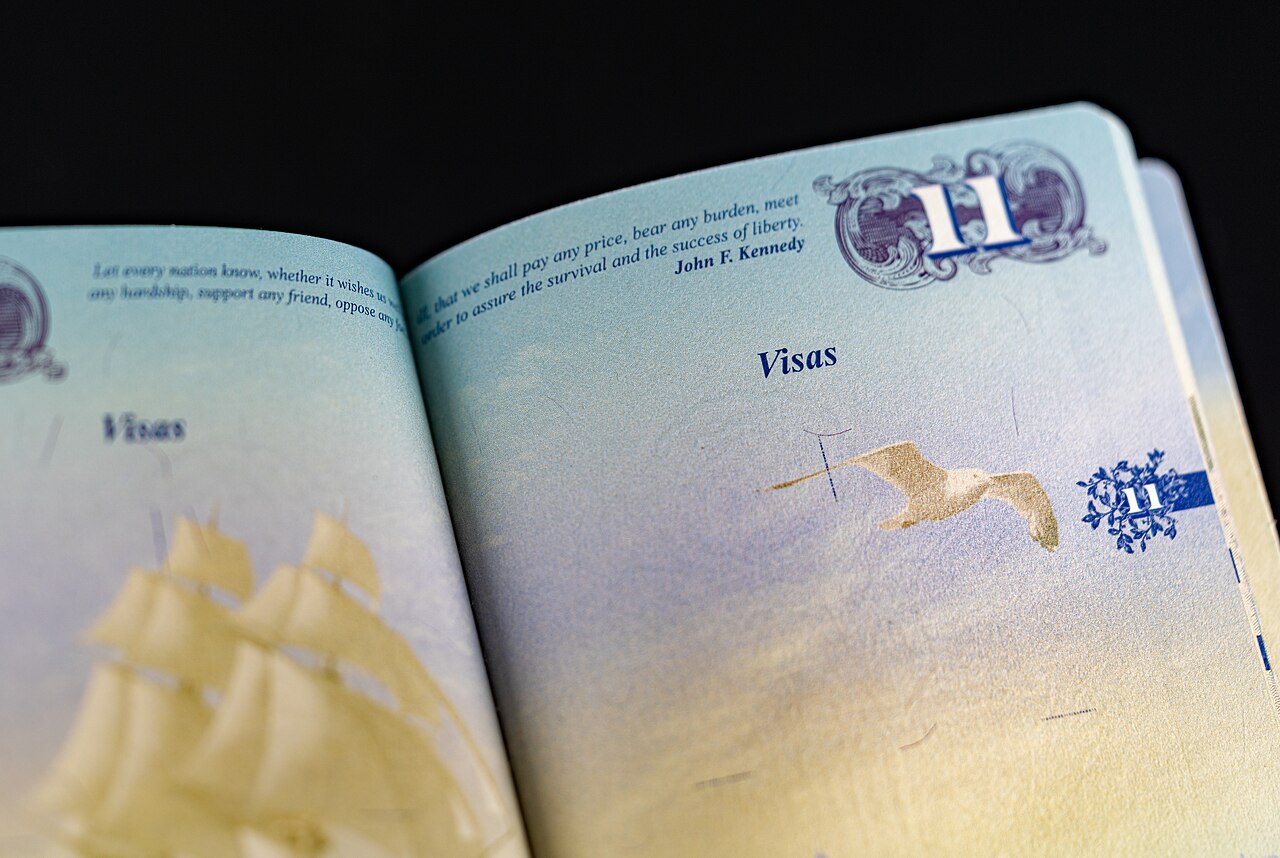
The passport book stands alone. It covers all international air travel, all the land and sea territory accessible by passport card, plus every other destination worldwide. The passport card and Enhanced Driver's License are subsets of its capability, not substitutes for it.
The Price of Credentials
Cost separates the options in ways that matter for infrequent travelers. New York charges no additional fee for a REAL ID if you obtain it at license renewal or first issuance. The Enhanced Driver License adds $30 on top of standard fees. Michigan prices its Enhanced Driver's License at $45 for a first-time applicant and $38 for renewal.
Passport pricing is set federally and is revised from time to time, so check the State Department's current fee chart before you budget rather than trusting a figure quoted in coverage. Historically, the passport card costs less than the book—typically around half—but lacks the book's global reach. Travelers who already hold a valid passport book or card can use that document as proof of legal presence when applying for an Enhanced Driver's License in Michigan, effectively layering credentials rather than choosing between them.
Limited Availability of Enhanced Licenses
Enhanced Driver's Licenses are not a national program. They require state-level agreements with the federal government and specific security technology. Only a handful of states issue them. Michigan and New York are two of the states that issue one; if you live elsewhere, check whether your state runs an enhanced license program at all before you count on it. If you do not reside in a state that offers one, the choice collapses to REAL ID license versus passport card versus passport book.
Michigan's enhanced license program requires proof of U.S. citizenship, a higher documentation bar than standard REAL ID, which only requires legal presence. The credential also embeds RFID technology for faster land border crossings, a feature irrelevant to airport security but meaningful for frequent drivers to Canada.
Matching Document to Travel Pattern
For the domestic-only flyer who drives or cruises to Canada, Mexico, Bermuda, or the Caribbean: the passport card provides airport access plus border crossings at lower cost than a passport book, assuming you never need to fly internationally. If your state offers an Enhanced Driver's License and you were planning to upgrade your license anyway, the added $30 (in New York) or $38–$45 (in Michigan) may be cheaper than obtaining a passport card separately, and you carry one card instead of two.
For the domestic-only flyer with no international travel at all: the standard REAL ID-compliant license costs nothing extra at renewal in states like New York, making it the cheapest valid option. Verify your own state's fee structure, as these vary and were not comprehensively sourced.
For anyone who might fly internationally, even once: the passport book is mandatory. The passport card and Enhanced Driver's License become redundant purchases unless you specifically value having a wallet-sized backup for land border crossings or prefer not to carry your passport book domestically.
The State Department's guidance is unambiguous on this point: the passport card "allows entry to the United States from Canada, Mexico, some Caribbean destinations, and Bermuda by land or sea." It does not say "and by air." Travelers who assume otherwise have been turned back at check-in.
The Practical Bottom Line
Count your likely destinations, not your aspirational ones. A passport card bought for a single cruise to Cozumel pays for itself if it prevents the $145-plus expense of a passport book you will not otherwise use. An Enhanced Driver's License makes sense if your state offers it and you prefer consolidating credentials. But any plan that includes international air travel—whether business to London or a bucket-list trip to Bangkok—forces the passport book purchase, rendering the cheaper documents optional add-ons rather than alternatives.